
Stephen King has never been shy his thoughts about adaptations of his work, and Stanley Kubrik’s 1980 film has always been a particular target. A lot of the lore that King describes on paper is excised in favour of a leaner, (whisper it, shallower?) horror. The nature of the Overlook’s haunting and the reasons for Jack Torrence’s descent into madness are left to conjecture, where there’s so much more depth written.
Enter Doctor Sleep, both a sequel to King’s novel and Kubrik’s film. It’s strange that this film even exists; it’s not an easy, cash-chasing sequel, coming hot-on-the-heels 40 years after the divisive original. Before anything else, it has taken upon itself to bridge the chasm that’s been created between paper and celluloid versions of the very particular phenomena King concocted: the nature of ‘Shine’, and elements such as the vampiric clan who chase it are now folded back in and explored.
The first very obvious choice that Director Mike Flanagan has taken is how to dovetail elements from Kubrick’s Shining into this new version. Using practical sets where possible and, crucially, recasting the stars of the original film. This proves mainly successful, with young actors taking the place of Shelley Duvall’s Wendy and Danny Lloyd’s Danny Torrence, perfectly easing you into the recreation, and proves a neat segue into a deeper, more interesting continuation. Certain elements later may prove contentious, but its a choice to be applauded, at a time when other films (King adaptations this year, no less) have opted for distracting digital solutions.
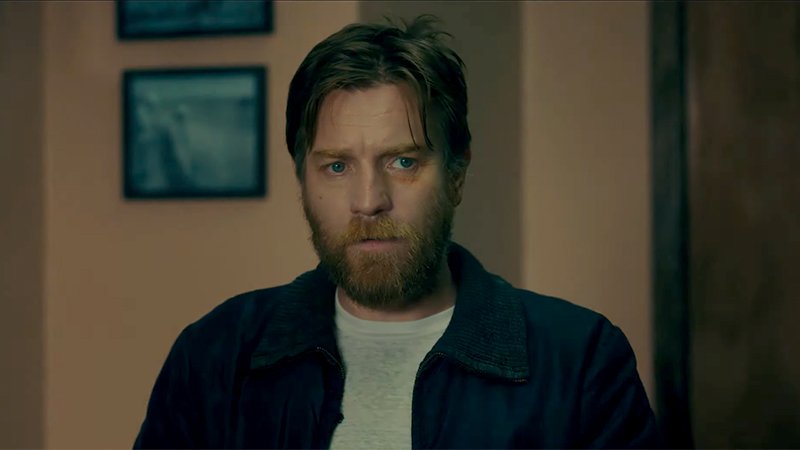
The source is probably to thank for such an unusual structure, which is to be embraced. We have 3 separate strands, revolving around Ewan McGregor’s older Danny, a mysterious, otherworldly rabble led by the enigmatic Rose, and a young family dealing with similar issues the Torrences once battled.
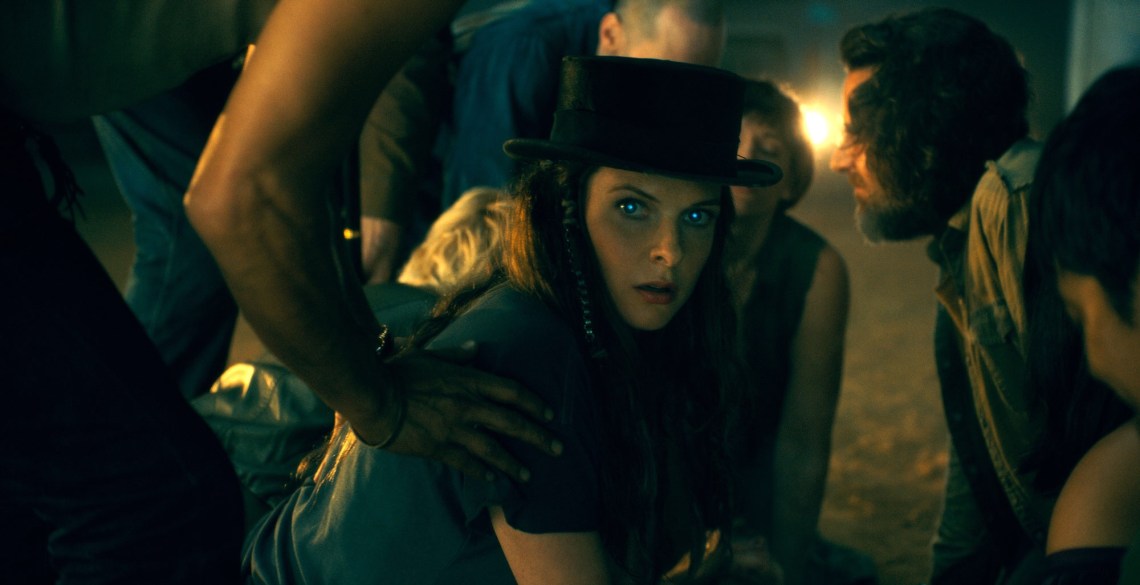
The cast are uniformly game, which is essential when what’s being portrayed is so batshit crazy. In such fantastic realms, it’s important that – while not necessarily explicit – the rules and boundaries of the lore are felt to be established and strict, and we’re always confident in that here. It has a sturdiness to it, where otherwise such developments might feel flimsy or unearned.
It’s not an easy sell. Some will check-out at the stranger elements, or baulk at the length, but it would be their loss. We’ve been served an odd, improbable, really interesting treat. King’s views shouldn’t really influence the audience of his adaptations – The Shining’s certainly didn’t – but I’d imagine he’d find this a much more satisfying endeavour.

 A Room With No View