I’m used to watching films take on the topic of drug trafficking. Generally, they’ve tended to tell an American story, framed from the perspective of US law enforcement or US experience more broadly. Movies such as Traffic (dir. Soderbergh, 2000) and Sicario (dir. Villeneuve, 2015) offer meaty and masculine expositions on the brutality which accompanies the international drugs trade – much of it bound up with the criminalisation of this trade.
Birds of Passage tells a different story, offering a unique perspective on an international phenomenon. Directed by Cristina Gallego and Ciro Guerra, Birds of Passage narrates the drug trade from the position of the traditional Wayuu people of northern Colombia. The films begins in the early days of the weed business, when, in the 1970s, Colombia experienced a marijuana boom. Birds of Prey is epic and elemental in its scope. The stunning terrains of northern Colombia offer a stark canvass on which to paint a sprawling story of a family’s downfall. This tale is told through the character of Rapayet (José Acosta), who commits himself to brokering drug deals between various US interests, and his uncle, a farmer whom he persuades to cultivate cannabis. The historical accuracy of the film has been questioned, but it works best as a broad allegory on the corruption of materialism. The film often visually evokes the feel of a Spaghetti Western, wind-scourged bleak desert plains dominate, with frequent surreal touches which bring the viewer back to the unfamiliar setting.
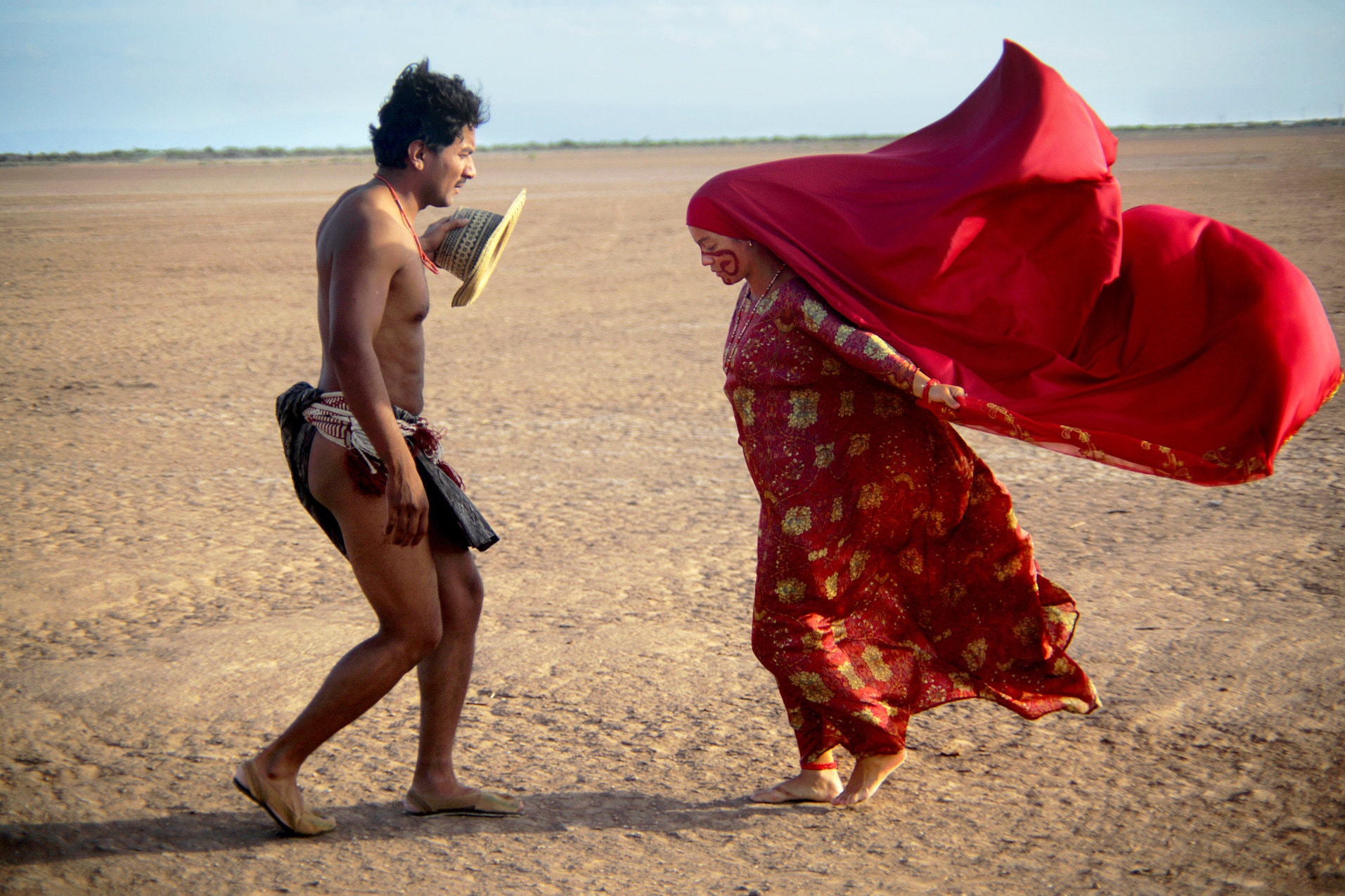
The film artfully tells its story of how traditional Wayuu customs come to be mapped onto late-twentieth-century drug trafficking. The ease with which centuries-old community mores are bent to the exigencies of international narcotics is fascinating. The film opens with an elaborate coming-of-age ritual, in which Zaida (played by Natalie Reyes) emerges from a period of isolation to engage in a startling and beautiful dance. Rapayet enters the dance with her, and afterwards consults with an uncle on how best to seek permission for marriage. His uncle cautions that Rapayet himself has little social standing, and Zaida’s family are powerful. Her family matriarch, Ursula (a fantastic Carmiña Martínez), is a formidable woman, and it is she who must be won over if the match is to take place. With little to offer, the proposed price tag of the marriage spurs Rapayet on to embroilment in the nascent drug trade.
Before his entry to the drug trade, then, Rapayet is familiar with the specific community economy of his people. Dowries are essential to make a good marriage. Powerful interests in families must be assuaged before matrimony can take place. Social life is highly ordered along customary lines, which extend from the living to the dead. The language and practice of drug trafficking is woven into this established social pattern. With age-old ritual intertwining with new and bigger stakes, the film presents its central characters as a hybridised cultural creation – both Wayuu and also modern and capitalist.
The criticism that the film misrepresents the Wayuu people should concern us. The film-makers, themselves Colombian but not Wayuu, were conscious of ensuring the participation of Wayuu people. However, it is inevitable that in any film with such power imbalances, accusations of exploitation and misuse can be made. There is always a risk, for one, that traditional Global South communities will be fetishised and exoticised. The uses of bird imagery, in the form of dreams and visions, does offer an ‘Othered’ mode for representing foreboding in the film. However, this device also works to build tension, and create an unsettling experience for the viewer. The film may also fall into the trap of telling an overly straightforward tale, in which modernity corrupts an unspoiled people. As someone who is ignorant of the Wayuu people, I’m in no position to judge whether the film hits its mark by presenting a respectful or faithful depiction. However, my sense is that Birds of Passage is telling a complicated story, and there may be no clear answer to this particular point.
Birds of Passage is a beautiful piece of film-making, it looks and sounds stunning. A tragic and compelling family drama, playing out in an unseen corner of a well known trope.


